





Diatomaceous Earth – How to Use It Against Pests at Home and in the Garden
03/27/2026 01:11:29 Poradniki , Informacje
Diatomaceous Earth – How to Use It Against Pests at Home and in the Garden
Diatomaceous earth is one of the most popular natural solutions for pest control. It is widely used by both home gardeners and indoor growers who want an effective alternative to chemical pesticides. Its action is simple, mechanical, and highly effective when used correctly.
If you are dealing with fungus gnats, spider mites, aphids, thrips, ants, silverfish, or even bed bugs, diatomaceous earth can be a very effective solution. In this guide, you will learn how it works, what pests it targets, and how to apply it properly.
Table of Contents
What is diatomaceous earth?
How does it work?
What pests does it work against?
How to use diatomaceous earth?
Dry application
Wet application (spray)
Use against specific pests
Pros and cons
FAQ
Summary
What is diatomaceous earth?
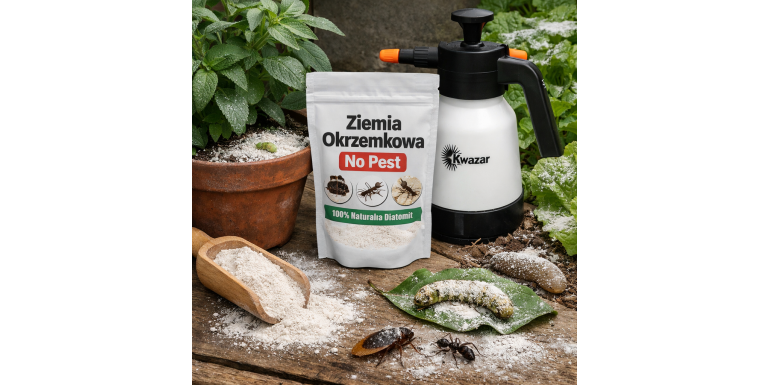
Diatomaceous earth (diatomite) is a natural substance made from fossilized microscopic algae. It appears as a fine white powder and is widely used as a natural pest control solution.
Many growers prefer it because it does not act chemically but physically, meaning pests cannot easily develop resistance.
How does it work?
Diatomaceous earth works mechanically. The tiny particles are sharp and highly absorbent. When insects come into contact with the powder, it damages their outer protective layer and causes dehydration.
? Important: it only works when dry.
What pests does it work against?
It is effective against a wide range of pests:
Fungus gnats (especially larvae in soil)
Spider mites
Aphids
Thrips
Whiteflies
Ants
Silverfish
Fleas
Cockroaches
Bed bugs
Slugs (as a barrier)
How to use diatomaceous earth?
There are two main application methods: dry and wet.
1. Dry application
Apply a thin layer of powder:
on top of the soil
around plants
in cracks and corners
along insect pathways
This method works best against fungus gnats, ants, bed bugs, and slugs.
2. Wet application (spray)
You can also prepare a spray solution.
? Mix about 1 tablespoon (15g) with 1 liter of water.
Spray the plant thoroughly, especially under the leaves. The product becomes effective only after the water evaporates.
? Grower tip: Always keep the top layer dry – moisture reduces effectiveness.
Use against specific pests
Fungus gnats
Apply dry on the soil surface to block larvae development.
Spider mites
Use spray, especially on the underside of leaves.
Aphids & thrips
Spray thoroughly and repeat regularly.
Bed bugs, ants, silverfish
Apply dry in cracks, along baseboards, and hiding spots.
Slugs
Create a dry barrier around plants.
Pros and cons
Advantages:
Natural and eco-friendly
No resistance buildup
Wide spectrum
Easy to use
Disadvantages:
Dust is harmful when inhaled
Works only when dry
Leaves white residue
Not selective (can harm beneficial insects)
FAQ
Is it safe for pets?
Yes, but avoid inhalation.
How fast does it work?
After contact with dry powder – within hours.
Can it be used on indoor plants?
Yes, especially for fungus gnats.
Do I need to reapply?
Yes, after watering or rain.
Summary
Diatomaceous earth is a powerful and natural pest control solution. When used correctly, it can effectively protect plants without chemicals.