




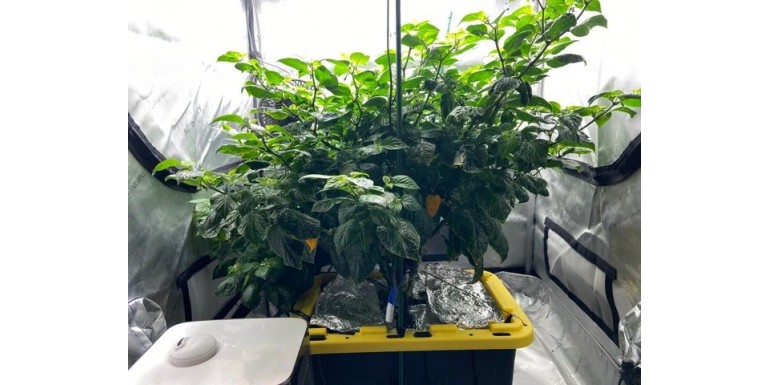
Growing peppers in a grow tent allows you to cultivate plants regardless of the weather or season. In an enclosed space, it is easier to control light levels, temperature, humidity and watering. However, peppers are light- and heat-loving plants, so growing them indoors requires good preparation. The key factors are a sufficiently tall tent, effective lighting, efficient air exchange, a stable growing medium and hand-pollinating the flowers.
Can you grow peppers in a grow tent?
Yes. Like chilli peppers, dwarf tomatoes and many herbs, peppers can be successfully grown in a grow tent. Compact varieties with a short to medium growth habit work especially well, although larger plants can also be managed if they have enough space above the canopy.
It is worth remembering that peppers need time. Several months often pass from sowing to harvest, and the plant develops an extensive root system and may eventually need support. A grow tent gives you control over the environment, but it does not replace regular observation. Leaf condition, growth rate, growing-medium moisture and the number of flowers quickly show whether conditions are suitable.
If you are just getting started, also read our guide on how to start growing indoors and what it may cost. It will help you plan your basic equipment.
Which grow tent should you choose for peppers?
The tent size should be matched not only to the number of pots, but also to the plants’ final height and the space needed for the light, filter and ventilation. Peppers do not always grow very tall, but during fruiting their stems may need support, while the fruit adds weight to the branches.
Small grow: one or two plants
For a trial grow with one small pepper plant, you can consider a compact tent. However, be sensible: a very low design makes it difficult to position the light at a safe height and limits the space above the plant. Browse small grow tents for home growing, keeping in mind that a model with adequate height will be the most practical choice for peppers.
Comfortable space for several plants
For two to four plants, it is worth choosing a tent that provides easy access to the pots and air circulation between the leaves. One compact option is the Hydro Shoot 80 grow tent, 80 × 80 × 180 cm. Its 180 cm height gives you more room to train the plants, install the lighting and adjust its position.
For a more extensive grow, larger grow tents with increased floor space are useful. A larger tent makes it easier to arrange plants, equipment and supports, while also giving you more control over temperature and humidity.
Light for peppers in a grow tent
Peppers need intense lighting, especially when they are building a compact canopy, setting flowers and developing fruit. In practice, LED grow lights designed for plant cultivation work well. Their output and coverage should be selected for the tent area and according to the fixture manufacturer’s recommendations, rather than wattage alone.
Young seedlings need gentler light than mature, fruiting plants. A light hung too close can cause stress, pale leaves or leaf curling, while placing it too far away can lead to stretched stems. Adjust the light height gradually while observing how the plants respond.
Many growers keep peppers under a long photoperiod, for example around 14–16 hours of light per day. Consistency is most important, though: use a timer and provide the plants with a regular dark period. When planning your setup, it is worth checking our article on how much electricity a grow tent with LED lighting uses.
Temperature, humidity and ventilation
Peppers enjoy warmth, but they do not tolerate prolonged overheating or sudden temperature fluctuations well. In a grow tent, problems are most often caused by heat from the light, insufficient extraction or a lack of air movement around the canopy.
- Temperature: maintain stable, warm conditions suitable for heat-loving plants; avoid both chilled roots and overheated growing tips.
- Humidity: do not allow the air to remain constantly humid, especially in a dense canopy and around ripening fruit.
- Air exchange: an extractor fan should remove stale, warmed air, while passive vents or an intake bring in fresh air.
- Air movement: a small circulation fan should move the leaves gently rather than blow strongly and constantly at one plant.
Good circulation reduces the risk of issues linked to stagnant moisture and helps strengthen stems. At the same time, do not direct a strong airflow straight at flowers and young leaves, as it can dry out the tissues.
Growing medium and pot – the foundation of healthy peppers
For beginners, growing in good-quality vegetable compost or a medium intended for cultivated plants is the simplest option. It should retain some water while remaining airy. A compacted substrate that stays wet for a long time increases the risk of root problems.
The pot must have drainage holes. Its final volume should be chosen according to the variety, expected plant size and training method. It is better to repot a young plant in stages once it outgrows a small container than to place a seedling immediately into a very large, heavy pot with a medium that stays damp for a long time.
In a grow tent, saucers beneath pots and regular removal of excess water after watering are particularly useful. Standing water under a container makes hygiene more difficult and can raise humidity inside the tent.
Watering peppers: less automation, more observation
Peppers do not like either a dried-out root ball or continual overwatering. Watering frequency changes with plant size, temperature, light intensity, pot size and stage of development. Rather than watering on a rigid schedule, check the moisture of the growing medium with your finger at a shallow depth and assess the weight of the pot.
Water the entire surface of the medium evenly, but do not create permanently waterlogged conditions around the roots. If a plant begins to wilt, do not immediately assume it needs water: the same symptom can also result from overwatering, overheating or root problems. Check the growing medium and conditions in the grow tent first.
Fertilising peppers indoors
A plant growing in a pot has access to a limited supply of nutrients, so once it has used the resources in the growing medium, it needs fertilising. Do not overdo the dose at the beginning. Young pepper plants are sensitive to excess fertiliser, and concentrations that are too high can put stress on the roots.
As the plant grows, it needs balanced nutrition, while during flowering and fruiting you should monitor its condition especially carefully. A complete grow tent kit can be a convenient foundation for your setup, while fertilisers should always be selected for the type of growing medium and used according to the manufacturer’s label.
For growing peppers in an organic medium, you may consider BIOBIZZ Trypack Indoor. This kit contains fertilisers for different development stages, but dosing should be adapted to the plants’ condition, soil quality and the manufacturer’s guidance. Do not increase doses “just in case” – more fertiliser does not mean faster growth or more fruit.
Pollinating flowers in a grow tent
At home, pepper plants usually have no access to pollinating insects or wind. Although their flowers can self-pollinate, it is worth helping the plants. When the flowers are open, gently shake the stems or lightly touch the flower clusters with a soft brush. You can also use gentle vibrations briefly, taking care not to damage the flowers.
Do this regularly during flowering. Excessive temperature, high humidity, drought or stress caused by overwatering can make fruit set more difficult. If flowers drop, assess the whole environment rather than pollination alone.
Training the plant and supporting stems
Peppers generally do not require aggressive pruning. In home cultivation, it is enough to remove leaves that are clearly damaged, diseased or resting on the growing medium, using clean tools. Removing too much foliage can limit the plant’s ability to photosynthesise and increase stress.
When the plant starts setting heavier fruit, use stakes, support rings or soft ties. Support stems loosely so the ties do not cut into the tissue. It is also a good habit to leave space between pots: leaves should be able to dry after watering and air should flow freely through the canopy.
Common problems when growing peppers in a grow tent
- Stretched, thin stems: often indicate insufficient light or that the light is too far from the plants.
- Yellowing leaves: may be related to watering, nutrient deficiency, unsuitable growing-medium pH or root problems.
- Flower drop: can result from temperature stress, air that is too dry or too humid, irregular watering or poor pollination.
- Spots and coating on leaves: require a quick response, improved circulation and a careful inspection of plants for pests and diseases.
- Soft, weak stems: may mean too little light, overly intensive watering or no gentle air movement.
The best way to prevent problems is a short daily inspection. Check leaves on both sides, soil moisture, ventilation operation and the distance from the light. Noticing changes early gives you a better chance to calmly adjust the conditions.
FAQ – growing peppers in a grow tent
How many pepper plants can you grow in one grow tent?
This depends on the tent’s floor area, the variety and pot size. More important than maximum plant density is ensuring that every plant has light, airflow and access for watering. It is better to start with fewer plants and leave them enough space.
How long do peppers grow in a grow tent?
It depends on the variety, conditions and the age of the seedling. Peppers develop in stages: germination, vegetative growth, flowering, fruit set and fruit ripening. From sowing to the first ripe fruit usually takes several months.
Do peppers need hand pollination?
In a grow tent, it is worth supporting pollination because there is no natural wind or insects. Gently shaking the plant or its flowers while it is flowering is a simple and safe method.
Can you grow peppers and chillies together?
Yes, as long as they have similar requirements for light, temperature and watering. However, consider differences in size between varieties and provide enough spacing so the plants do not shade one another.
Why do pepper leaves curl in a grow tent?
There can be several causes: temperature that is too high, light positioned too close, incorrect watering, overly strong airflow or the presence of pests. First check the environmental conditions and inspect the leaves carefully.
Summary
Successful pepper growing in a grow tent relies on stability. Give plants enough space, strong and correctly positioned light, warm conditions, regular ventilation and a well-draining growing medium. Water after assessing the state of the pot, fertilise moderately and support pollination during flowering. This makes it easier to grow healthy plants through to a harvest of aromatic, ripe fruit.