




Hydroponics for Beginners – A Simple Step-by-Step System
10/19/2026 00:04:15
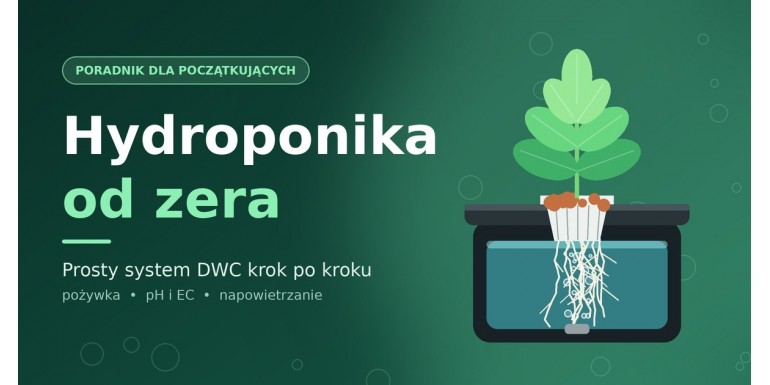
Hydroponics is a method of growing plants without traditional soil. The roots take up water, oxygen and minerals directly from a prepared nutrient solution, while the plant is supported by a net pot and an inert growing medium. For beginners, the easiest starting point is a simple DWC (Deep Water Culture) system, where the roots sit in an aerated reservoir. Below, we explain how to prepare such a setup and run it without unnecessary complications.
What is hydroponics?
In hydroponic growing, soil is replaced with water containing dissolved nutrients. The roots do not need to search for food in the growing medium, but they do need regular access to oxygen. This is why DWC systems use an air pump and an air stone.
Hydroponics gives you a high level of control over the root environment. At the same time, it requires consistency: you need to monitor the water level, plant condition, solution temperature, pH and EC. However, you do not need to begin with an extensive installation. One container and one plant is a sensible way to gain practical experience.
Which hydroponic system should you choose first?
Available systems include DWC, NFT, ebb and flow, drip systems and automatic feeding systems. Each works differently, but for a first setup it is best to choose a solution that is simple, easy to clean and intuitive to monitor.
DWC – the simplest hydroponics system for beginners
In DWC, the plant is placed in a net pot above a reservoir. Its roots grow towards the nutrient solution, which is continuously oxygenated. There is no need for water circulation, multiple lines or a controller. However, you do need a reliable air pump and must limit light exposure to the solution.
If you prefer a ready-made solution rather than assembling every component yourself, the VIVOSUN SYSTEM DWC 4x 18.9L is an example worth comparing. Before buying, check the number of growing sites, the system dimensions and whether it will fit your chosen space.
A passive system as an alternative
Passive hydroponics relies on nutrient solution being drawn up through a wick or on roots reaching into a reservoir. It is very simple, but it is easier for the root zone to become too wet. An aerated DWC system usually demonstrates the key principles of water-based growing more clearly: the importance of oxygen, cleanliness and regular parameter checks.
What do you need for a simple DWC system?
You can prepare the simplest setup yourself. Choose components intended for contact with water and keep them clean. The reservoir should be opaque or effectively shielded from light, as light in the nutrient solution encourages algae growth.
- an opaque container with a lid;
- a hydroponic net pot matched to the opening in the lid;
- an inert medium to stabilise the plant, such as clay pebbles;
- an air pump, airline tubing and an air stone;
- fertiliser intended for hydroponic growing;
- a pH meter and pH adjustment products;
- an EC or TDS meter – particularly useful for monitoring nutrient strength;
- clean water and a container for mixing the solution;
- lighting, if you are growing in a place without suitable natural daylight.
Plants grown indoors need stable lighting. It is worth comparing LED grow lights in terms of the growing area, mounting method and the plants’ actual needs. More practical tips can be found in the guide Which Light to Choose for Growing Plants?.
Hydroponics step by step: building your first DWC system
Step 1: choose your growing location
Place the system on a stable, level surface, away from intense sunlight and heat sources. A water-filled reservoir is heavy, so it is best to choose its final location from the outset. The room should allow convenient access to the lid, tubing and plant.
A dedicated space helps keep things tidy and conditions more stable. For a small home grow, a grow tent can be useful, as it separates the light and makes it easier to organise your equipment.
Step 2: prepare the reservoir and aeration
Make an opening in the container lid that matches the net pot. The net pot should sit securely without falling inside. Next, place the air stone at the bottom of the reservoir and connect it to the airline and pump. The tubing can be run through a small hole in the lid or a dedicated cut-out.
After filling the reservoir with water only, turn on the pump and check that the air stone produces bubbles evenly. Continuous aeration is one of the key elements of DWC. Without it, the roots have limited access to oxygen and the risk of root-zone problems increases.
Step 3: rinse and prepare the growing medium
Clay pebbles or another chosen medium should be rinsed thoroughly to remove dust. Their role is not to feed the plant, but to support it and maintain space around the roots. They do not replace fertiliser or nutrient-solution parameter control.
At the beginning, it is easiest to work with a young plant or seedling with healthy, light-coloured roots. Remove any remaining soil carefully, without pulling. The less growing medium that enters the reservoir, the easier it is to keep the water clean.
Step 4: prepare the nutrient solution
Fill the reservoir with water, leaving room below the lid. Then add fertiliser according to the manufacturer’s instructions, preferably starting with a milder concentration than the target level. Mix the solution thoroughly after adding each component. Do not mix fertiliser concentrates directly with one another.
For your first attempts, choose fertilisers with clear dosing instructions and use them according to the label. For people starting home growing, BIOBIZZ Trypack Indoor is an option worth considering in the beginner fertiliser kits LVL 1 category. When choosing plant nutrition, remember that in classic hydroponics, products recommended by the manufacturer for this growing method generally work best. If in doubt, the article How to Choose Fertilisers for Growing at Home? may be helpful.
Step 5: measure and adjust pH and EC
Once the solution is prepared, measure its pH. A slightly acidic pH is commonly used for many hydroponically grown plants, but the correct range depends on the species. Therefore, do not set parameters from memory – check the recommendations for the specific plant and fertiliser you are using.
EC indicates the conductivity of the solution and, indirectly, its strength. EC that is too high can make water uptake more difficult, while EC that is too low indicates an insufficient nutrient level. Beginners should avoid increasing fertiliser doses in advance. Observing the plant and taking regular measurements is safer than making sudden adjustments.
Step 6: place the plant in the system
Position the plant in the net pot and surround its roots with rinsed clay pebbles so that the stem is stable. At the initial stage, some roots should be able to reach moisture or the area of intensive aeration. Once the system stabilises, the roots will develop towards the solution.
Close the reservoir with the lid, start the aeration and make sure no light enters the container. Do not position the plant too deeply: excessive submersion of the stem base may contribute to problems.
Daily and weekly care
Hydroponics does not require watering with a watering can, but it is not a maintenance-free system. Regular, brief checks are most important. They help you notice a change before it affects the condition of the plant.
- Daily or every few days: check the air pump, water level, leaf appearance and the smell of the reservoir.
- Regularly: measure pH and EC, especially after topping up water or adding fertiliser.
- When the level drops: top up with water and adjust parameters carefully based on measurements.
- Periodically: replace the nutrient solution and clean the reservoir, air stone and net pot. Frequency depends, among other things, on temperature, plant size and system cleanliness.
Solution temperature matters: water that is too warm contains less dissolved oxygen and can increase the risk of biological problems. Air exchange is also important when growing under a light. Explore ventilation for growing plants to choose a solution for the size of your growing area and room conditions.
Common mistakes in your first hydroponic grow
Light entering the reservoir
A transparent container, poorly sealed lid or uncovered openings can lead to algae growth. Cover the reservoir and keep its interior dark.
No aeration or a pump failure
DWC relies on delivering oxygen to the solution. Check the pump regularly and do not ignore changes in the roots’ appearance. The roots of a healthy plant should look fresh, without a slimy coating or unpleasant smell.
Nutrient solution that is too strong
More fertiliser does not mean faster growth. An excess of mineral salts can burden the plant. Start cautiously, use an EC meter and introduce any changes gradually.
Skipping pH checks
Even a well-prepared nutrient solution can change its pH over time. Without pH monitoring, the plant may take up nutrients present in the water less effectively. This is one of the most common causes of unclear problems for beginners.
Poor housekeeping and infrequent cleaning
Deposits, root debris or dirty tools can interfere with system operation. Make cleaning a regular part of your routine, and thoroughly wash all parts that contact the nutrient solution before the next cycle.
FAQ: hydroponics for beginners
Is hydroponics difficult for beginners?
It does not have to be difficult if you start with a small DWC system and one plant. Monitoring pH, EC, water temperature and aeration requires the most attention. A simple design reduces the number of elements that need diagnosing.
Do you need soil for hydroponics?
No. In hydroponics, soil is replaced by a nutrient solution, while the plant is stabilised in a net pot with an inert medium such as clay pebbles. The medium has a mechanical role and is not the main source of nutrients.
How often should you change the water in a DWC system?
There is no single schedule that suits every grow. It depends on reservoir size, plant growth rate, temperature and parameter stability. It is worth replacing the solution when it is dirty, when its parameters are difficult to stabilise, or according to the routine established for the fertilisers you use.
Can you use regular houseplant fertiliser in hydroponics?
Not every houseplant fertiliser is suitable for a hydroponic system. Choose products that the manufacturer permits for use in water, and always follow the dosage instructions. This helps reduce the risk of deposits and unpredictable changes in the nutrient solution.
Why do hydroponic roots turn brown?
Possible causes include a high solution temperature, weak aeration, contamination, light entering the reservoir or a nutrient-solution issue. First, check the pump operation, reservoir smell and cleanliness, water temperature, and current pH and EC.
Summary
Your first hydroponic system does not have to be expensive or complicated. A simple DWC setup lets you learn the basics of soilless growing: preparing nutrient solution, aerating the roots, measuring pH and EC, and keeping the reservoir hygienic. Start small, record your measurements and respond calmly, step by step. In hydroponics, stable conditions are far more important than frequent, drastic changes.